 Jessica Simpkin
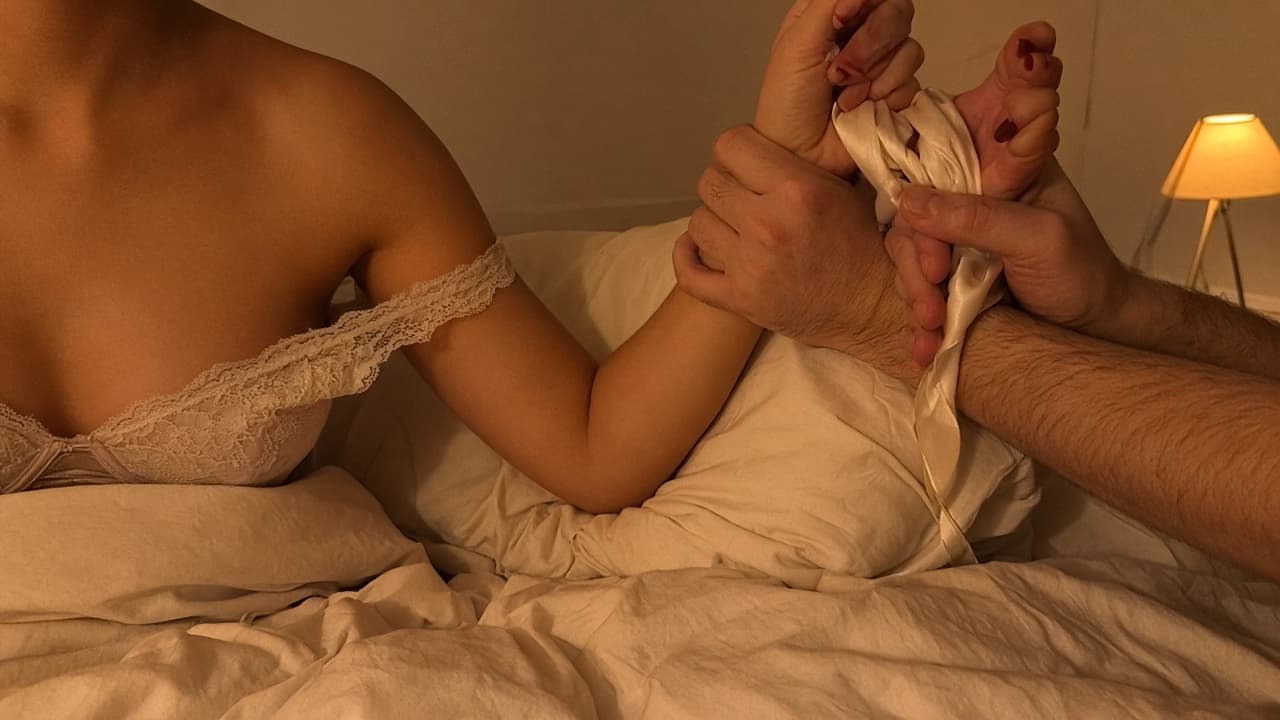
I thought BDSM meant a cupboard of leather I did not own and a personality I had not ordered. What I actually did, one evening in a rented bedroom with a lamp that leaned, was say a sentence and put my wrists on the pillow above my head. He held them there. Twenty minutes. Then we put the kettle on. If you came here for bdsm for beginners, that is nearer the truth than a starter kit.
Talk. A scarf if you want one. A word you can say when the room goes the wrong way. That is a first scene. It stays in the bedroom. It does not require a new wardrobe.
BDSM for beginners: the letters, then the room
The acronym is a filing cabinet, not a lifestyle. Bondage, discipline, dominance, submission, sadism, masochism. People argue about which letter belongs to which night. I do not need you to memorise the cabinet. I need you to know that the useful bit is power you have both agreed to move around for a while, and sensation you have both agreed to try.
Bondage is being held, or holding. A hand. A scarf. The feeling of not having to decide the next minute. Discipline, in the way I have met it, is a rule you asked for (do not move, wait, ask). Dominance is deciding. Submission is handing the deciding over, on purpose, for a stretch you can end. The last two letters are about sting and intensity that some people like and some people do not. You can try the first half of the cabinet and never go near the second.
I used to think you had to want all of it or none of it. That is how the internet sells a personality. I wanted to be held still and told to stay. I did not want a lecture about pain as a moral improvement. Both of those facts can live in the same body.
Who this is for: two adults who are curious, or one adult who is curious and another who is willing to hear it. Who it is not for: anyone you have not asked, anyone who is drunk enough that yes has gone soggy, anyone under eighteen, which should not need saying and still does.
Whether the letters are useful: a little. They give you a search term. They also make people buy things they do not need. I would rather you asked for what you want in ordinary English than learnt a vocabulary that makes the night feel like a club you have not joined.
If you are also wondering whether the wanting itself is strange, that is a different door. This one is how to start, if you start.
Talk first, toys later
The sentence I said that night was not a speech. It was: I want you to hold my wrists above my head and not let me move them unless I say red. He asked what red meant. I said stop, fully, no discussion until I am back in the room as myself. He repeated it back. That was the whole contract.
You do not need a script. You need a thing you want, a thing you do not want, and a way out that does not require charm. If you cannot say the way out in daylight, you are not ready to use it in the dark. I have been the person who mumbled. Mumbling is how you get a man who thinks he is being romantic when he ignores a flinch.
Talking about sex with a partner is easier out of the bed than in it. I have done the sticky, defensive version. It made both of us worse. A walk, a sofa, a kitchen table after the plates are stacked: those rooms let you be a bit clumsy without performing.
What to cover, in language a human would use:
What you want to try, in one picture. Wrists held. Being told to wait. A smack on the thigh if that is actually the picture, not a thing you said because a film said it.
What is off. For me: anything on the neck that restricts breathing, anything that looks like a dare, anything that continues after I have gone quiet in the polite way. Quiet-polite is not consent. It is manners. I have used manners as a hiding place. I am trying to retire that.
A safeword. Red is boring and I like it. Some people use a traffic-light (green, yellow, red). Yellow means ease off, check, do not escalate. Red means stop. You can also say stop. If you are the sort of pair who says stop as part of the game, you need a word that is not part of the game. If you are not that pair, stop is enough, and you honour it the first time.
Aftercare, named before you start. Water. A jumper. Five minutes of being a person again. I used to skip this. I will come to that.
What you do not need in the first conversation: a shopping list, a film recommendation, a joke that makes the other person smaller for being nervous. Nervous is information. Mockery is a way of not hearing it.
Toys can wait. I have bought things I did not need. The first useful objects in my life were a pillow, a scarf I already owned, and a word. If you want hardware later, you will know, because the night has asked for it, not because a website offered a bundle.
A first scene that lasts twenty minutes
Keep it short on purpose. Long is how you get lost in a mood and forget to check the person. Twenty minutes is enough to feel the shift and not so long that anyone has to invent a second act.
Here is what I have actually done, and what I would tell you to copy.
Clothes can stay on at the start. I have done this in a shirt. The point is not a strip. The point is the held still.
Agree who is holding and who is being held. You can swap another night. Swapping in the same twenty minutes is how you get a muddle and a laugh that kills the thing, which is fine if you wanted a laugh, and annoying if you wanted the quiet.
Start with a position you already like. I lay on my back. Wrists on the pillow. He knelt over my hips, not heavily, and put his hands around my wrists. Not crushing. Present. I could have pulled free if I had really meant to. The feeling was that I had agreed not to.
If you want a scarf, loop it so it comes off with one tug. I have written more about light bondage you can undo in a second. Do not tie necks. Do not improvise something you cannot reverse. If fingers go cold, pale, or tingly, you undo it. That is not a mood killer. That is you having a body.
Then you do less than you think. Kiss. Stay. Tell them they are staying. If you are the one being held, you get to make a noise, or none. I used to fill silences with jokes. The jokes were a way of leaving. When I stopped, the room got very specific. That was the part I had been shopping for in the wrong aisle.
Twenty minutes on a phone timer in the other room is not romantic and I have used it. Better a dull timer than a scene that drifts because nobody wanted to be the one who ended it.
If someone says the word, you stop. You do not finish your idea. I have been the person who said, wait, one more minute, and I still dislike that version of myself. One more minute is how you teach someone that the word is a negotiation. It is not.
You can have ordinary sex in the same evening, before or after, or none. The scene is not a promise that anyone will come. It is a stretch of attention. I have come during it. I have also got up hungry and slightly shy and wanted toast more than a finish. Both nights counted.
The bit I got wrong was treating the first try as an audition for a bigger personality. I kept waiting to feel like someone else. I felt like myself with my arms above my head. That was the whole discovery. If you are waiting to become a different woman, you will miss the twenty minutes you actually have.
Aftercare is not optional
I used to skip it. I thought aftercare was for people who had done something more impressive than a pair of wrists. I sat up, asked if he wanted the news on, and then folded a jumper that did not need folding. An hour later I felt oddly thin, as if someone had turned the volume down on my body and forgotten to turn it back.
That drop is ordinary. You have been in a state. The state ends. The body has to come back into the room where there are bills and a leaking gutter. If you skip the landing, you land anyway, just less kindly.
What I do now, even after a short scene:
Water, before anyone gets eloquent. I have talked nonsense with a dry mouth and called it a debrief.
Something on the skin that is not a hand in a scene. A shirt. A blanket. His palm on my shin while we say ordinary sentences.
A check that is not a score. Was that all right. Do you want to be near me or do you want a bit of space. I have needed both, on different nights. Space is not a rejection of the last twenty minutes. It is a nervous system finishing its work.
The next day, a small message if you are not in the same flat. I am fine. I liked the wrists. I would do it again, or I would change this one thing. Silence after a first scene is how people invent a story in which they were too much.
If you are the one who held, you get aftercare too. I used to forget that. He had been concentrating. He needed to be a person who was not responsible for my wrists for a minute. I made tea that first night and thought the mug was the care. The mug helped. The sentence I said later (you did that well, I felt safe) helped more. I should have said it before I started folding clothes.
I am not a therapist. If a scene leaves you shaky for days, or if you cannot stop replaying a no that was not honoured, that is bigger than a blog. Talk to someone whose job is that room. For the ordinary drop, water and a jumper and a kind sentence will do more than a lecture.
If it is not for you
You can read this, feel nothing, and be finished. Curiosity is not a homework assignment. I have friends who tried a held wrist, said it felt like being trapped in a lift, and went back to sex in which everyone could move. That is a successful experiment. You learnt a fact.
You can also want it in your head and not in the room. I have a few of those. The thought is hot. The logistics make me tired. Keeping a thought as a thought is allowed. You do not owe a fantasy a booking.
If your partner wants this and you do not, you say so without turning them into a problem and without turning yourself into a project they will fix. A no can be kind and still be a no. If the no is about fear of the word, that is worth a slower conversation. If the no is about your body, believe the body.
If you want it and they do not, you do not sneak a scarf on as a joke. Jokes that remove someone's choice are not jokes. You can ask again later, once. Asking every month is a drip. I have been dripped on. It made me smaller.
Some people will tell you that you are not really doing it unless there is kit, a club, a title. I have met that voice. It is bored of its own evening and wants company. I have not become a professional anything. I have become better at saying the sentence before anyone starts.
FAQ
How do beginners start BDSM?
With a conversation in clothes, then one small picture, then a short stretch of time, then a landing. I started with wrists on a pillow and a word. You could start with being told to keep your hands on the headboard, or with asking someone to wait while you look at them. You do not start with a purchase and a film. You start with a sentence both of you can repeat.
Do we need equipment?
No. A pillow, a scarf you can undo, and a word will take you further than a parcel. Equipment is useful later if a specific night keeps asking for the same thing and your hands are tired. It is not a ticket. I still like the nights that fit in an ordinary evening and do not require a new cupboard.
What is a safeword?
A word that means stop, fully, without debate, until the person who said it is back in the room as themselves. Red is enough. If you play with the word stop, you need a different one. If you do not, stop is a perfectly good safeword and you treat it as one. Saying it is not a failure of the scene. Ignoring it is.
Can BDSM be gentle?
Yes. Mine often is. Held still, spoken to, waited with. Intensity is not the same as unkindness. You can have a night that would look almost ordinary from the doorway and still feel like a shift in who was steering. Gentle is not a lesser version. It is a version. If you want sting later, you can ask for sting later. You do not have to earn it by surviving a first night that was too much.
If you want it, start with a sentence you can both hear. If you do not, leave the letters where they are and have the evening you already like.
8 Comments
Talk, scarf, stop word. That is the checklist I needed.
Reply
Yes. Exactly. Thank you bestie 💕
Reply
Starting curious at 50 and this calmed me down. We tried holding hands above the head and putting the kettle on after. Felt like us, not a costume.
Reply
Bookmarked!!
Reply
LOVE this. Scarf and a word, not a dungeon.
Reply
Wrists on the pillow for twenty minutes is so much more useful than the leather cupboard myth.
Reply
Glad you said first scenes stay in the bedroom. Warm-up over shopping list.
Reply
Any tips when one of you wants more power play and the other only wants light restraint?
Reply